Common Problems with Dental Crowns
Let us begin by saying dental crowns are not dangerous – they’re widely used in dentistry to protect and restore the tooth’s natural appearance and function.
But just like any type of dental treatment, dental crowns are susceptible to certain risks and complications – all of which patients will likely never experience when having a dental crown placed by a reputable dentist who has assessed your prior suitability for a crown.
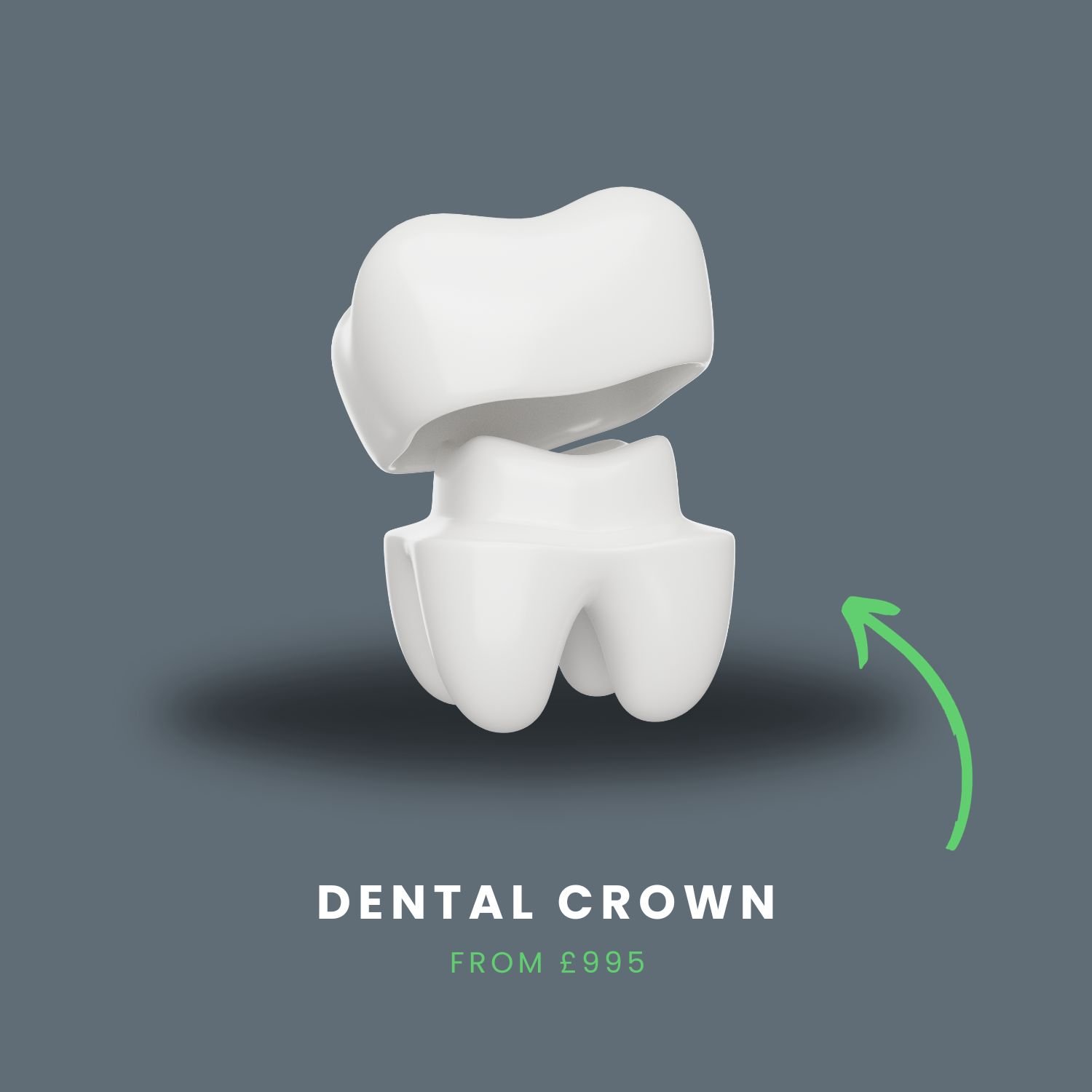
If you do happen to experience any problems with your dental crown, contact a dentist as soon as possible to ensure everything with your oral health remains in tip-top condition. Here at Mint Dental Clinic, our London dentists provide a wide range of dental crown types and materials, with costs starting from £995.
Your dental crown will still be susceptible to decay
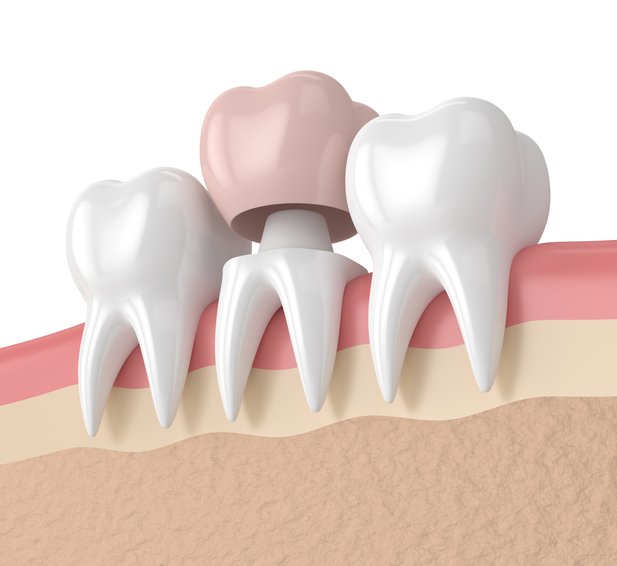
A dental crown is a fake tooth but still requires great oral hygiene and care. Dental decay is arguably the most common issue with dental crowns, as oral conditions like decay and gum disease can still impact the underlying tooth.
While your dental crown will remain intact, if you fail to maintain a good oral hygiene routine, infections and pain can occur with the underlying tooth.
If decay has already set in underneath the crown, we’ll have to remove it, clean it, and make a brand-new one. However, issues that arise from dental decay can be easily avoided with preventative techniques like brushing and flossing twice a day.
Trying to save money on dental crowns can result in poor placement
Problems with dental crowns tend to involve improper placement, as poorly fitted dental crowns can impact a patient’s bite, which can cause discomfort when eating.
If you have a painful, wonky bite, a dentist must fix it. It is critical to have the problem repaired to prevent bacteria from creeping in and causing an infection.
Heightened sensitivity
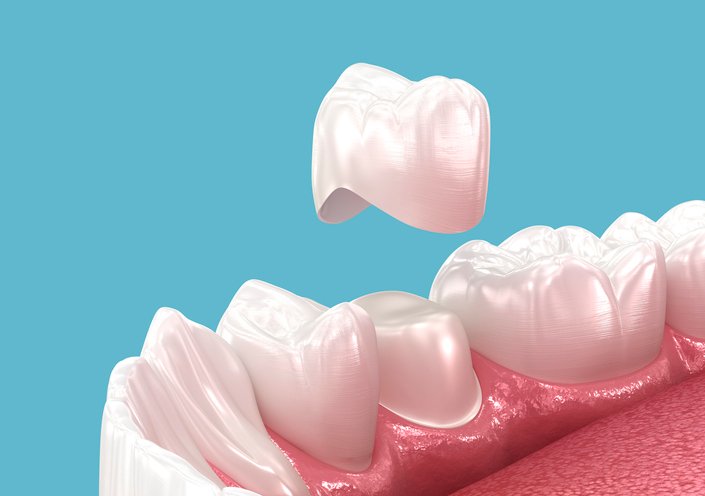
After a dental crown procedure, where the tooth’s enamel is filed away, you might experience a heightened sensitivity when eating foods and drinks at certain temperatures for the first week.
However, if you still experience sensitivity after this period, the dental crown might not be covering the whole tooth correctly or sufficiently.
If this is the case, you’ll have to visit the dentist to have your crown re-cemented.
Dental crowns can break
Dental crowns, especially made from porcelain, are more susceptible to cracks, breaks and fractures. While more durable materials exist, porcelain crowns are often preferred because of their natural appearance, but you’ll have to take extra special care of them.
If the crown does crack, it can sometimes be repaired by applying resin to the affected areas; however, larger breaks might be too complex to repair and require replacement.
Allergic reactions are rare
We’ll typically ask you about any allergies before recommending a crown. For example, gold and metal dental crowns can cause issues if you have allergies. However, if you are unaware of an allergy before the crown is placed, you can typically expect to suffer from soreness around the tooth and gum. Your dental crown will then need to be replaced with a porcelain alternative.
Dark gum lines and grey gums are common with some types
If you’ve had a metal-based crown fitted, for example, porcelain-fused to metal, you can expect that over time, the tooth might dull or begin to change colour.
However, it’s nothing to worry about as it’s just the metal showing the gum line. It’s not a harmful problem but more of an aesthetic concern, which can be fixed by swapping out your metal-based crown for a porcelain alternative.
Read next:
Affordable dental finance on all treatments over £995.00