Root Canal Treatment & Dentists in South Bank (SE1)
- Chosen and counted on by hundreds of patients in Lambeth and Southwark
- 200+ five-star Google Reviews and growing
- Root Canal experts are on-site and available daily (the go-to specialists in South Bank for referrals)
- Our London clinic is only a short, five-minute walk from South Bank station.
Mint Dental Clinic is a local London dentist in South Bank, serving patients near Waterloo, Southbank, Blackfriars, Embankment and Kennington.
Are you experiencing intense, spontaneous pain in your teeth? Is it paired with bad breath, swelling or sensitivity to hot and cold foods?
According to our specialist endodontist, you might be experiencing pulpitis symptoms; if that’s the case, you might require a root canal to save your tooth and stop the pain.
Suppose you’re experiencing tooth pain or are worried about your oral condition. In that case, it’s best to get in touch with us – we’ll be able to diagnose what’s happening and prescribe the next best treatments to alleviate any discomfort.
Dental treatments we offer in South Bank
Fillings | Dental Crowns | Gum Disease | Hygienist | Tooth Extractions
Has a dentist told you that you need a root canal but are not sure this is the best next step? Please consult with our specialist dentists, who have undergone additional training to take on and handle complex cases.
Root canals in a nutshell
- The root canal procedure is typically carried out over two or more appointments.
- Patients not entitled to free NHS dental treatment will have to pay for a root canal.
- Sometimes, root canals can be particularly complex, requiring a dental referral to a specialist endodontist (with Mint Dental, we have specialists on-site, so you won’t need to be referred out of our care).
- According to NHS data, nine out of ten root-treated teeth survive for 8 to 10 years.
- Having a crown placed on top of the tooth after treatment gives the tooth better chances of survival.
- If infections return, root canal treatment can be repeated (re-root canals).
- Over 15 million teeth are saved worldwide due to root canals.
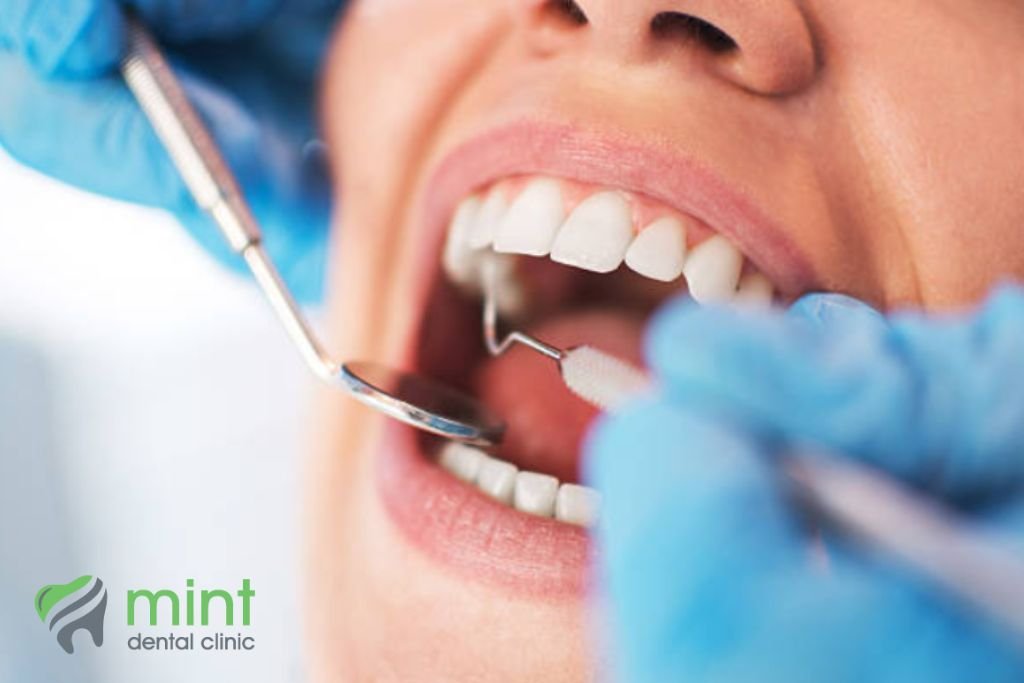
Signs that indicate you might require a root canal
Endodontic procedures are often necessary when the pulp (the soft tissue inside the root canal) becomes infected – this inflammation or infection causes various issues that can cause the tooth to chip or crack.
Additionally, injury or trauma to the teeth can cause pulp damage, even if your tooth has no visible chips or cracks.
When the pulp becomes infected and is left untreated, patients can often further develop abscesses and be left in a lot of pain.
Root canal symptoms:
- Sharp or severe pain when chewing, eating or biting down
- Pimples appearing on the gums
- Chipped and cracked teeth
- Prolonged and lingering sensitivity to hot and cold
- Gums are swollen and tender
- Deep decay or darkened gums

How successful is root canal treatment?
Root canal treatment is often successful at clearing out the infection and saving the tooth. When combined with dental crowns, the outcome of your root canal treatment can be more successful and extend the tooth’s life for a further 8 to 10 years.
Pursuing this route means that patients can avoid losing a tooth, which comes with its own extraordinary problems like bone loss and tooth movement.
The chance of your tooth surviving for a long time will increase if you keep your teeth clean.
However, the survival of the tooth will also depend on several factors, including:
- How much natural tooth remains
- Your standard of oral hygiene and cleanliness
- The biting forces of the tooth
Root canal procedure steps
- Anaesthetic – you will remain awake during the procedure with the anaesthetic numbing any of the pain.
- Removal of the pulp – our endodontist will make an incision at the top of the tooth to expose the damaged pulp. Our specialist will then remove it using special tools called files. All pathways and canals will be cleared out.
- Antibiotics – topical antibiotics will be coated by the dentist to prevent reinfection. The tooth will then be sealed with a sealer paste and a rubber-like material called gutta-percha. Oral antibiotics might also be prescribed.
- Temporary filling – we’ll fill the small opening with temporary material to prevent saliva from getting in.
Following a few days from the procedure, our specialist will invite you in to take X-rays to ensure the infection has gone.
If all looks good, we will replace the temporary filling with a permanent one, with some patients preferring a permanent crown as a final restoration. Dental crowns are artificial teeth often constructed from porcelain and are hailed for their realistic appearance to natural teeth.

- Reviews: ★★★★★ (200+ Google Reviews).
- Telephone: 020 7928 4474.
Car parking spaces are available near the practice (Colnbrook Street).
Affordable dental finance on all treatments over £995.00