
The most frequently asked patient questions, along with everything you need to know about the All-on-4 process, cost, maintenance, and more.
Fixed implant bridges (such as All-on-4) are generally considered the most comfortable dentures to wear, as they don’t move, rub, or rely on suction or adhesives to stay in place.
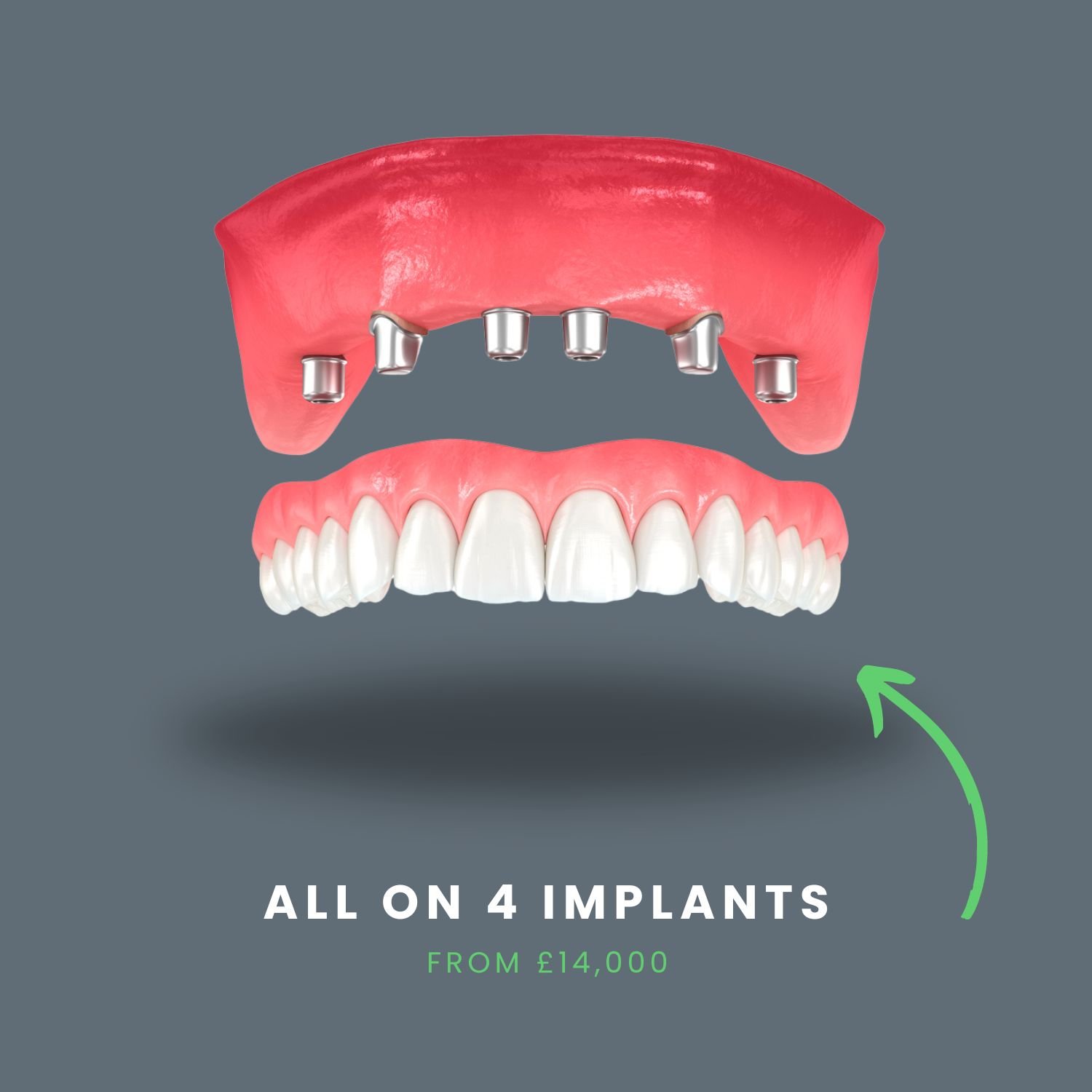
Costs for a full set of All-on-4 dental implants will depend on where you seek treatment and the implantologist who will place your implants and oversee your treatment. At our clinic in London, our implantologists charge from £14,000, including your implants, abutments, prosthetics, and all your appointments. Dental finance is available up to 60 months to spread the cost.
Sadly, All-on-4 dental implants are a private dentist-only treatment and are not offered on the NHS. Dentures are the standard prosthetic used.
All-on-4 dental implants are worth the money in many ways. Not only do they look, feel, and function like natural teeth (the closest replica), but they also prevent facial sagging and promote strong bone health.
On top of this, they’re the only fixed denture option available, featuring a palateless option that enhances eating, chewing, and speaking.
Plus, as a fully graftless procedure, patients can avoid bone grafts when this type of implant is placed.
All-on-4 is a highly effective full-arch solution, but one drawback is that it’s a surgical procedure, so there’s a recovery period (3 months for the implants to integrate with the bone).
Additionally, because of its high cost, it’s a significant upfront investment.
The ideal All-on-4 patient is someone who:
A consultation is essential to confirm suitability.
Dental implants are not recommended for patients with uncontrolled diabetes, those who have untreated periodontal disease, or those who take certain medications that might impact their healing following surgery. These factors do not always rule out treatment, but they might require addressing first.
During the healing phase, you’ll need to avoid hard, crunchy, or chewy foods for a few weeks. Once fully healed, most patients can return to a normal diet and enjoy foods like steaks again (far better than traditional denture-eating options). Patients typically enjoy a normal, unrestricted diet.
As the treatment is carried out under local anaesthetic or dental sedation, patients shouldn’t feel any pain during the procedure. Mild discomfort or swelling, on the other hand, is normal following the procedure and can be easily managed with pain relief, with symptoms subsiding after the first week post-op.
All-on-4 has a strong reported success rate of 95-98%, with some clinical studies showing survival rates of 10 years or more. That said, good oral hygiene and regular dental appointments are key to long-term success.
The best option depends on the amount of bone in your jaw, budget, and expectations.
All-on-4 undoubtedly provides superior stability, comfort, chewing capacity and confidence compared to alternatives like removable dentures that rely on suction. All-on-4, on the other hand, is fixed in place using dental implants that act like artificial tooth roots.
All-on-4 is a same-day procedure in which patients receive fixed, temporary teeth on the same day as implant placement. 3 months later, patients will receive their final bridge.
All-on-4 dental implants can last up to 30 years – they’re permanent only in the fact that you’ll need a dentist to remove them.
Daily brushing, flossing and regular dental hygienist appointments are essential. After placement, we’ll also show you how to clean around the implants effectively for long-term success. Special tools such as interdental brushes, water flossers, or implant-specific flosses are recommended to help clean effectively around implants and the bridge.
Gum disease must be treated and stabilised before implants can be placed, as it can cause your implants to fail. Once controlled, many patients can become suitable candidates for All-on-4.
All-on-4 implants are a graftless solution specifically designed for patients with jawbone loss. The implants are angled, helping them to maximise their existing bone and avoiding bone grafts altogether.
You should attend regular check-ups and hygiene visits, typically every 6 months, the same as you would for natural teeth.
With proper care, the implants themselves can last up to 30 years, and often a lifetime. The fixed teeth attached to the implants may need maintenance or replacement after 10–15 years due to wear.
Implant failure is uncommon. If an implant fails, your dentist will assess whether it can be replaced or whether the bridge can be redesigned using the remaining implants. There are clear processes in place if this does happen, so don’t worry, you’ll be covered.
All-on-4 teeth are custom-designed to match the natural shape, size, and colour of your teeth.
Yes. We offer conscious IV sedation to help you feel relaxed and comfortable during the implant placement, making treatment suitable even for the most phobic and anxious of patients.
All-on-4 uses four implants per arch, while All-on-6 uses six. The difference here is that All-on-6 provides greater stability for patients with substantial bone loss.
Yes, you will be in the clinic with a fixed set of temporary teeth to trial, allowing you to smile fully and function normally as healing takes place.
Yes. Unlike loose dentures, All-on-4 implants are fixed in place, often improving speech clarity and eliminating clicking or movement when talking.