Composite Bonding Can Close Gaps But Only of a Certain Size!
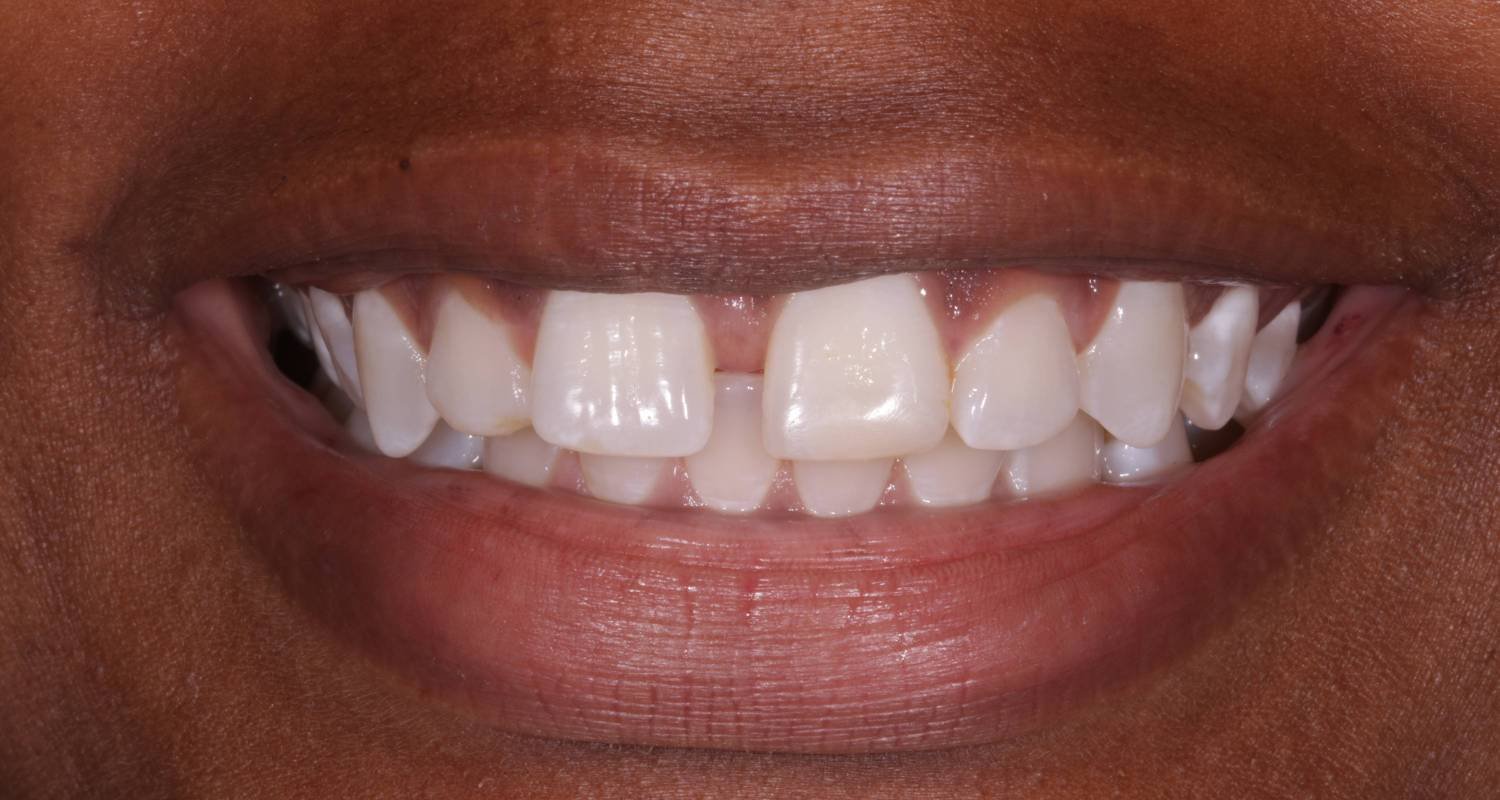
- Composite bonding can be used for gapped front teeth
- Composite bonding can be used for multiple gaps throughout your smile
- The treatment is designed to close small to moderate gaps
- Gaps larger than 5 mm are classed as diastema
Composite bonding not only closes gaps but can also improve the colour of teeth, change the size and shape of a smile, and help teeth look neater and more even.
But while the trending material is effective for closing gaps between teeth, it will only work on gaps of certain sizes, so if you have particularly large gaps, you might want to explore alternative treatments to shrink the gap (don’t worry, we’ll explore them below)!

The size of gaps composite bonding is good for
Composite bonding is mostly only suitable for closing gaps of a specific size and works best for gaps around 1-2 mm. That said, depending on your case, the material is also known to be effective at closing gaps around 2-3 mm. However, gaps that are larger than this might be more challenging.
Composite bonding is possible for gaps between 3 and 6 mm, but it will be more difficult. We might have to sacrifice aesthetics or function, making the results feel slightly less natural. Therefore, gaps of this size or larger than 6 mm will see better results with alternative treatments designed to close more significant gaps.
Still want to use composite? Use composite veneers instead for larger gaps
Composite bonding is designed to be placed on one area of your tooth, typically the edges, to restore jagged lines, for example. Composite veneers, on the other hand, cover the entire tooth and might be more effective at closing larger gaps than composite bonding alone.
Composite veneers use a thicker layer of composite material, making it possible to cover larger gaps up to 6 mm. Again, if you have very large gaps between your teeth extending past 6 mm, the composite material won’t be sufficient to help.

How to close gaps larger than 6 mm
Orthodontic treatment might be your first step to make the gaps between your teeth smaller before we can implement other treatments to close them completely.
The larger the gap, the longer it can take to correct, with treatment times taking up to two years. However, if your gaps are around 6 millimetres, you can typically expect them to be gone within 9 months when using Invisalign.
However, Invisalign might not be an appropriate orthodontic option if your gaps are larger than 6 mm. In this case, we might have to explore fixed options to effectively reduce the size of your gaps.
Explore treatments for gapped teeth.
The limitations of composite bonding
Remember that composite bonding or even composite veneers will only conceal the aesthetics of the gaps rather than actually close them. Orthodontics will take care of the problem for good, whereas composite bonding only lasts 5-7 years before you need to replace or renew it. So, it might not be the best long-term option unless you’re happy to maintain the treatment every few years.
Learn more about composite bonding
- What is Composite Bonding?
- How Long Does Composite Bonding Last?
- Composite Veneers Vs Porcelain Veneers
- Composite Bonding Costs
Affordable dental finance on all treatments over £995.00